Men and Boys: Men, Masculinity, Body Image and Eating Disorders in Male Athletes
Listen & support
Eating disorders will affect 10 million American men at some point in their lives—yet most will never be diagnosed, and fewer still will receive treatment. In this episode, we're joined by elite endurance athletes Sean Van Horn and TJ David to explore how diet culture targets men differently, why the fitness industry's vocabulary makes disordered eating so easy to hide, and what happens when "discipline" becomes something darker.
We trace the cultural history of male body obsession from Eugen Sandow's 19th-century physique photography to Charles Atlas's Depression-era mail-order fitness empire to today's manosphere influencers. We dig into Harvard psychiatrist Harrison Pope's famous G.I. Joe study, which found that action figures' biceps have ballooned from a realistic 11.5 inches in 1964 to an impossible 27 inches by 1995, bigger than Arnold Schwarzenegger at his peak. And we play a game called "Influencer or Dictator?" that reveals just how much fitness motivation culture sounds like authoritarian propaganda.
Sean shares his personal experience with eating disorders as a male athlete, including the shame that kept him silent for years and the conversation that finally pushed him toward help. TJ offers his perspective as both an elite athlete and coach on how the "stay hard" mentality creates fertile ground for disordered behaviors—and how the psychological roots of these issues require psychological solutions, not more optimization.
If you've ever wondered why men make up 25% of eating disorder cases but only 10% of those in treatment, or why "clean eating" and "race weight" don't raise the same red flags as restriction does in women, this episode is for you. We're pulling back the curtain on the ways patriarchy harms men too—and why the path forward requires vulnerability, community, and a whole lot less cold plunging.
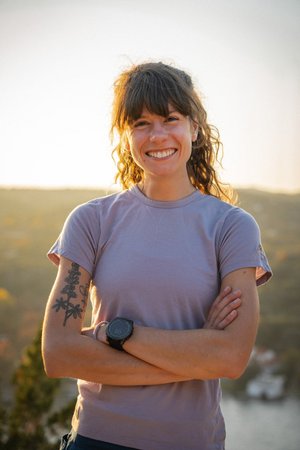
Featuring: Sean Van Horn (mountain athlete, mental health advocate) and TJ David (founder, Microcosm Coaching)
Content note: This episode discusses eating disorders, disordered eating, mental health challenges, and references to self-harm. Resources are available at nationaleatingdisorders.org or by texting "NEDA" to 741741.
Zoë Rom: Welcome to Your Diet Sucks!
Sean Van Horn: The podcast that's for the boys.
Kylee Van Horn: I'm Zoë Rom and I'm Kylee Van Horn.
Sean Van Horn: I'm Sean Van Horn.
TJ David: I'm TJ David.
Zoë: You might notice we have double the hosts in the studio today. Studio is absolutely chock full. We invited the husbands on board for this week. We're talking about men and boys, and we thought we might be better served by bringing on a couple subject matter experts. This was really important for us to cover because we do view ourselves as a feminist show and having a feminist lens, which is absolutely not about excluding men. And it's so much more for us about understanding how gender constructs harm everyone. Everyone at this table is bearing some sort of burden because of this.
Patriarchy especially harms men by telling them that they can't be vulnerable. That they can't be sick in these specifically feminine ways, that they can't ask for help. And it's the exact same wellness industrial complex that we critique on this show that hits men just as hard, but in ways that we're not as accustomed to looking for, understanding, and giving voice to. And it just, it's same shit in a different hat.
Sean Van Horn: I've been fasting all day for this, so I'm really excited to dig in. That was part of the instructions, right? I'm Sean Van Horn. I'm an endurance athlete and live in Carbondale with my wife, Kylee over here. I think probably a good fit for this because I am a male that is suffering with an eating disorder. And while there are some of us out there, there's not a whole ton that are very public about it. So happy to share my story and dig into this a bit.
TJ David: TJ here, I guess I'm on here because I'm a coach. I work with endurance athletes. So in my day-to-day, this stuff comes up, especially with male athletes. I've been on the athlete side myself as a former professional skier, elite level endurance athlete like Sean. So I understand this from a personal level as well. I don't know, I'm vegan. It's definitely something that I've thought more about lately is like how I eat is maybe a reflection of some of those things.
Zoë: One of the things I wanted to start with is a fun quiz that I made up called Influencer or Dictator. One of the fun themes that we're going to tease apart today, there is this pressure on men to be extremely disciplined and be extremely hard on themselves. And I was looking at a lot of influencer quotes while doing research for this episode, and I was like, man, like about half of these things feel like they could be 100% from like a Stalin speech.
Kylee: We talk a lot about how diet culture affects women on our episodes, but Zoë, you've kind of been down a research rabbit hole here on men and eating disorders. So I'm curious, what did you find in your search?
Zoë: There is a lot of research, and with that, there is this caveat that a lot of experts in this area estimate that the numbers we have available are undercounts because the way that men present with eating disorders or disordered eating can be really different and under-recognized. But what we know is that in the U.S. alone, eating disorders will affect 10 million men at some point in their lives according to NEDA. Men make up about 25% of anorexia and bulimia cases, which is one in four. But men are only about 10% of the people in treatment. So about a quarter of cases, 25% and 10% are in treatment, so that leaves us to ask, where is that other 15%?
We also know that the mortality risk is higher. Men with eating disorders are six to eight times more likely to die than men without, and because they're diagnosed later, their cases tend to be more severe by the time they show up. In one study from 1999-2009, hospitalizations for eating disorders in males increased by 53%.
That gap exists primarily because the diagnostic criteria were literally developed by studying white adolescent girls. Actually up until about the 80s, one of the criteria for being diagnosed with an eating disorder was loss of the menstrual cycle. Screening tools ask about wanting to be thinner, but men often want to be both bigger and leaner simultaneously, so they slip through the cracks on a lot of the most popular screens.
Sean Van Horn: Eating disorders are definitely on my radar. I developed an eating disorder as essentially a response to a really difficult situation, which is something really common across men and women. I was sent to a very unfun boarding school and it was essentially a coping mechanism that I developed. I then got into bike racing when I was a teenager. Eating disorders, disordered eating are incredibly prevalent in that space. While eating disorders weren't necessarily talked about, being thin was really, really a big thing and something that I think permeates the endurance community.
TJ David: For a lot of guys, what you look like esthetically from an early age, it really does become something that you're aware of. Do I have abs? Do I look cut? And that association with fitness, athleticism, and then that being like a direct link to status. And so if you look a certain way, the perception of you in a social situation is like your self-perception is I will be considered like higher up in the social landscape here.
Zoë: Let me tell you about Charles Atlas. We're going to go back to the first real famous bodybuilder who was a Prussian strongman named Eugen Sandow. He really helped transform bodybuilding from like a circus act sideshow into a form of performance. His big innovation was using photography, which at the time was a new technology.
Fast forward to the early 20th century, Angelo Siciliano was born in Calabria, Italy in 1893 and arrived at Ellis Island as a small, frail, sort of like sickly kid who spent most of his early life getting bullied, but went on to win the "world's most perfectly developed man" contest in 1921. He became Charles Atlas, and his business did really well during economic crises. This is something really important to keep your eye trained on—how in times of political and economic upheaval, people will often revert back to trying to exert control over their bodies when they feel that they have less control in the larger world.
Zoë: I want to talk about this really interesting study from 1999 called the G.I. Joe study. Harvard psychiatrist Harrison Pope measured action figures over 30 years. He looked at the original G.I. Joe from 1964, which was scaled to human height, had biceps of about 11.5 inches—which were more or less normal. By 1975, Joe had been putting in substantial time at the gym. By 1994, G.I. Joe had a professional bodybuilder's physique. And then in 1995, we saw the birth of G.I. Joe Extreme, which scaled to human size, would have a 55-inch chest, 27-inch biceps. For reference, Mark McGuire, the home run champ, had 20 inch biceps and Arnold Schwarzenegger had 22.
TJ David: You can just see how this creates so many issues for people. That's even unachievable for Arnold Schwarzenegger, who's a champion bodybuilder.
Zoë: For men, this is often presented as discipline rather than obsession. This is just what you have to do to do the job. Whereas, if a woman posted about eating seven precisely timed meals and waking up at 4 a.m. to exercise every single day with no days off, we'd be like, uh, girl? But when The Rock does it or when a famous cyclist does it, he's a motivational figure worth hundreds of millions of dollars.
Sean Van Horn: We are in this uncertain time. We're not sure if we're gonna have our jobs, if everyone's gonna die from some mysterious disease and you cling onto what you can. Another interesting point that some people are talking about is the crisis with young men—men struggling of all ages, but especially Gen Z and younger millennials struggling to get jobs, to succeed in school and go to college. And those things can be pretty tough. It can be hard to have control over that, but it can be a lot easier to take a supplement stack to increase your testosterone or try to go to the gym and lift some weights and get bigger.
Kylee: When we talk about fitness vocabulary, these are kind of the red flags that you want to understand about yourself. For example, cutting and bulking. Clean eating. Cheat days. The "if it fits your macros" mentality—which is just orthorexia with more math.
Sean Van Horn: A lot of this narrative does, both for men and for women, is it encourages more and more self-obsession. If you focus on the self, if you isolate, if you go to the gym, if you run more, if you eat less, you will be happy. And to TJ's point, these issues are psychological. You need more community, you need more love in your life. You probably need to work on some of the things that never got addressed when you were younger. Go to therapy. That's probably gonna make you more happy and have more satisfaction in life than increasing your bench press by 45 pounds.
Kylee: We talked earlier about how 25% of cases of eating disorders are men, but only about 10% of them tend to get treatment. So we want to kind of look at why there's this gap and what might be stopping male athletes from getting help.
Zoë: What comes forward in the research is that idea of shame and stigma. Two persistent myths are that eating disorders only occur in women or in gay men. And that delays recognition and it deters help seeking. There's also just a lack of recognition. And if you don't know men can have eating disorders, you can't name what's happening to you or your friend or your dad or your brother or your teammates.
There is some good news that once men find help, they actually show similar effective responses to treatment as women. The outcomes are comparable, they just need to get there. I think that a shift I would be stoked to see is reframing recovery as performance optimization—meeting people where they are.
Sean Van Horn: My college roommate sat me down and had a very stern conversation with me that something needed to change because he didn't want to find me dead in a ditch. I think one aspect that can help quite a bit is discussing this in terms of pain, of shame, of struggle, and relating it to a mental health issue as opposed to a vanity issue. Eating disorders are one of the leading causes of death behind opioid addiction when it comes to mental health disorders. They're very real. I battled anxiety, I battled depression and being in the throes of an eating disorder is by far the most pain I've ever experienced in my life.
TJ David: I think it is important to recognize the psychological aspect of this. One of the best things we can do, especially guys, is try to open up trusting space for people to feel like they can come forward and talk about these things. If we can't provide space for that, then the stigma rules us and we can never really unburden ourselves of what we're going through. Being an active listener is probably the best first step you can do as somebody who wants to help someone else.
Zoë: Thanks for listening to Your Diet Sucks. If you like what you're hearing, be sure to share your favorite episode with a friend or on social media. Your Diet Sucks is hosted and researched by Kylee Van Horn and me, Zoë Rom. Sound and production also by me. Thanks to Clio Rom for the amazing original artwork for each episode.
Guest Information & Links
Sean Van Horn
Bio: Sean Van Horn is a mountain athlete and endurance sports advocate based in Carbondale, Colorado. Winner of the 2018 Grand Traverse Ski, 2018 Five Peaks Breckenridge, and 2017 Grand Traverse Run, Sean transitioned from competitive cycling to ski mountaineering and ultrarunning after a back injury. He has been open about his personal experiences with eating disorders, depression, and mental health challenges, using his platform to raise awareness about male eating disorders in endurance sports. In 2019, he completed a 24-hour vertical ski record attempt at Buttermilk to raise funds for Aspen Strong, and in 2020 set the second-fastest time on Colorado's Nolan's 14 route.
Where to find Sean:
• Strava: strava.com/athletes/4858366
• Instagram: https://www.instagram.com/s_to_the_vh/?hl=en
TJ David
Bio: TJ David is the founder and head coach at Microcosm Coaching. A former Professional Big Mountain Skier and Ski Mountaineer, TJ performed at the highest level internationally for over a decade, with first descents in Norway and Colorado, Warren Miller Entertainment appearances, and publications in every major ski magazine worldwide. He transitioned to trail and ultrarunning, becoming the 2018 US SkyUltra Running Champion and course record holder at multiple events. TJ holds certifications in Sports Psychology and Trail & Ultra Run Coaching from UESCA, and Holistic Health and Integrative Nutrition from the Institute of Integrative Nutrition. He was the recipient of the 2019 IIN Leadership in Health Coaching Award.
Where to find TJ:
• Instagram: @coachtjdavid
• Microcosm Coaching: microcosm-coaching.com
• Microcosm Instagram: @microcosmcoaching
References
Peer-Reviewed Research
Pope, H. G., Olivardia, R., Gruber, A., & Borowiecki, J. (1999). Evolving ideals of male body image as seen through action toys. International Journal of Eating Disorders, 26(1), 65–72. https://doi.org/10.1002/(SICI)1098-108X(199907)26:1<65::AID-EAT8>3.0.CO;2-D
Baghurst, T., Hollander, D. B., Nardella, B., & Haff, G. G. (2006). Change in sociocultural ideal male physique: An examination of past and present action figures. Body Image, 3(1), 87–91. https://doi.org/10.1016/j.bodyim.2005.11.001
Murray, S. B., Nagata, J. M., Griffiths, S., Calzo, J. P., Brown, T. A., Mitchison, D., Blashill, A. J., & Mond, J. M. (2017). The enigma of male eating disorders: A critical review and synthesis. Clinical Psychology Review, 57, 1–11. https://doi.org/10.1016/j.cpr.2017.08.001
Strother, E., Lemberg, R., Stanford, S. C., & Turberville, D. (2012). Eating disorders in men: Underdiagnosed, undertreated, and misunderstood. Eating Disorders, 20(5), 346–355. https://doi.org/10.1080/10640266.2012.715512
Lavender, J. M., Brown, T. A., & Murray, S. B. (2017). Men, muscles, and eating disorders: An overview of traditional and muscularity-oriented disordered eating. Current Psychiatry Reports, 19(6), 32. https://doi.org/10.1007/s11920-017-0787-5
Pope, H. G., Katz, D. L., & Hudson, J. I. (1993). Anorexia nervosa and "reverse anorexia" among 108 male bodybuilders. Comprehensive Psychiatry, 34(6), 406–409. https://doi.org/10.1016/0010-440X(93)90066-D
National Organizations & Statistics
National Eating Disorders Association. (n.d.). Eating disorders in men & boys. NEDA. https://www.nationaleatingdisorders.org/eating-disorders-in-men-boys/
Eating Disorder Hope. (2023). Statistics on males and eating disorders. Eating Disorder Hope. https://www.eatingdisorderhope.com/information/statistics-studies
Books
Hamilton, T., & Coyle, D. (2012). The secret race: Inside the hidden world of the Tour de France: Doping, cover-ups, and winning at all costs. Bantam Books.
Pope, H. G., Phillips, K. A., & Olivardia, R. (2000). The Adonis Complex: The secret crisis of male body obsession. Free Press.
Historical Sources
Gaines, C., & Butler, G. (1974). Pumping Iron: The art and sport of bodybuilding. Simon & Schuster.
Santelmo, V. (1997). The complete encyclopedia to G.I. Joe (2nd ed.). Krause Publications.
Media Coverage
Boulder Weekly. (2019, July 18). Attempting a vertical ski record, amid eating disorders and depression. Boulder Weekly. https://boulderweekly.com/adventure/attempting-a-vertical-ski-record-amid-eating-disorders-and-depression/
Aspen Daily News. (2019, March 16). Breaking records as well as stigmas. Aspen Daily News. https://www.aspendailynews.com/news/breaking-records-as-well-as-stigmas/
Trail Runner Magazine. (2020, August 5). Overcoming physical and mental anguish, Sean Van Horn sets a Nolan's 14 second-fastest time. Trail Runner Magazine. https://trailrunnermag.com/people/overcoming-physical-and-mental-anguish-sean-van-horn-sets-a-new-nolans-14-fkt.html
Influencers & Figures Referenced
Goggins, D. (2018). Can't hurt me: Master your mind and defy the odds. Lioncrest Publishing.
Willink, J., & Babin, L. (2015). Extreme ownership: How U.S. Navy SEALs lead and win. St. Martin's Press.
Historical figures referenced: Eugen Sandow (1867–1925), Charles Atlas/Angelo Siciliano (1892–1972), Benito Mussolini, Joseph Stalin
Films & Media Referenced
Fincher, D. (Director). (1999). Fight Club [Film]. Fox 2000 Pictures.
Butler, G., & Fiore, R. (Directors). (1977). Pumping Iron [Documentary]. White Mountain Films.
Judge, M. (Director). (2006). Idiocracy [Film]. 20th Century Fox.
Resources for Help
National Eating Disorders Association (NEDA) Helpline: 1-800-931-2237
Crisis Text Line: Text "NEDA" to 741741
NEDA Website: nationaleatingdisorders.org
Aspen Strong (mental health resources): aspenstrong.org